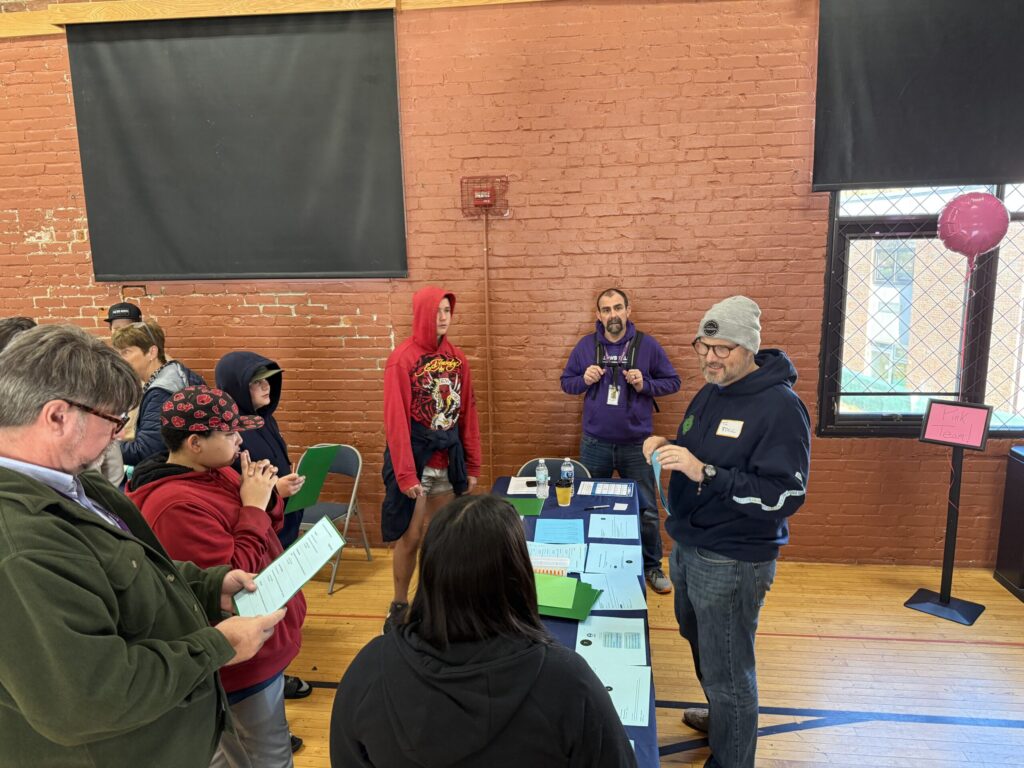

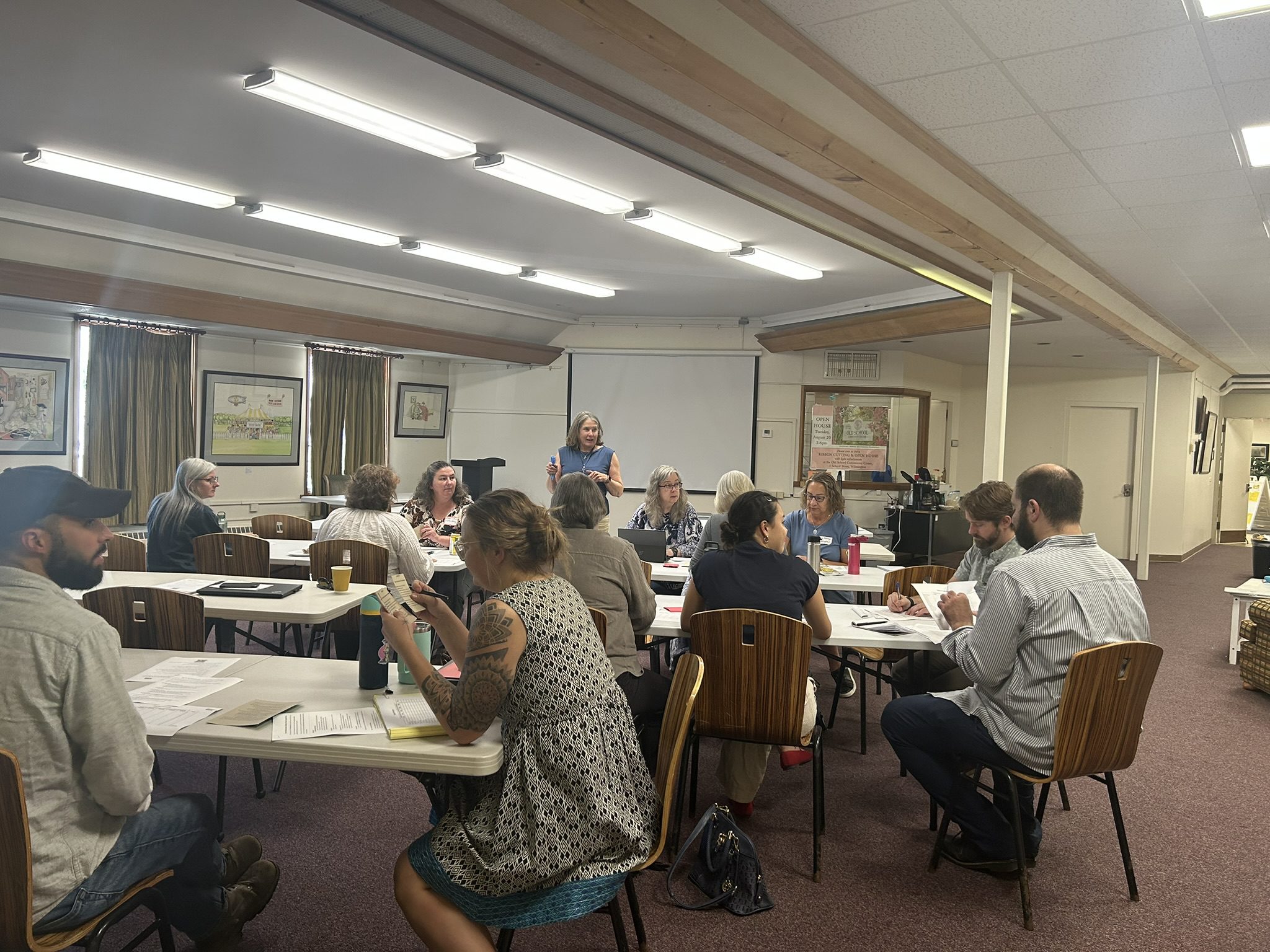
Above: Participants playing the “capital planning” game. Photo credit – BDCC Staff
WILMINGTON – More than forty Southern Vermont municipal leaders gathered on September 11 for the Southern Vermont Capital Planning Roundtable, the fourth event in BDCC’s Municipal Leaders Roundtable series. The conversation focused on a challenge every town faces: how to maintain roads, buildings, equipment, and water systems while preparing for future costs and emergencies.
Marguerite Ladd, Government Finance Specialist at the Vermont League of Cities and Towns (VLCT), offered a practical starting point. Towns do not need a perfect capital plan in year one. Insurance schedules, equipment logs, town plans, maintenance records, and past project files already contain much of the information needed to begin. From there, towns can identify what they own, estimate when it will need work or replacement, set priorities, and connect those decisions to the annual budget.
Marguerite also discussed how reserves and borrowing can work together. Saving each year helps a town prepare for future purchases and unexpected repairs. Borrowing can spread the cost of a long-lasting asset across the people who will benefit from it. Both approaches work best when leaders can show residents what is planned, why it is needed, and how it will be paid for.
The Vermont Bond Bank’s presentation connected capital planning to disaster resilience. Recent floods have shown how quickly damaged roads and bridges can create major costs for towns. A capital plan gives municipalities a place to identify vulnerable infrastructure, plan improvements, and build reserves before the next emergency. The Bond Bank also introduced its disaster reserve benchmarks, which can help towns consider how much to set aside for transportation infrastructure risks.
Participants received a five-year capital budget and equipment replacement worksheet with sections for municipal facilities, highway projects, highway equipment, and water and wastewater systems. The ensuing workshop helped participants work through putting projects, rough costs, and anticipated timing in one place.
One idea carried through the roundtable: capital planning is an ongoing conversation about priorities. Starting with the information a town already has can make the next budget decision clearer and help leaders prepare for opportunities and challenges ahead.
Keep the conversation going
Explore VLCT’s capital budgeting tools and templates and the Vermont Bond Bank’s capital planning resources, including materials from past Capital Planning Forums.
Municipal leaders can also connect at VLCT Town Fair on October 7. Know someone who might be ready to serve on a local board? Share SoVT Get on Board series, which helps current and aspiring community leaders build the skills and connections to get involved.
BDCC is planning the next Municipal Leaders Roundtable for early December, with a focus on working regionally and sharing resources. Details will follow.
About SVEP
Brattleboro Development Credit Corporation’s Southern Vermont Economy Project provides training and technical assistance to strengthen local capacity and advance community and economic development projects in Southern Vermont. SVEP is funded in part through the USDA Rural Community Development Initiative. Learn more about SVEP.