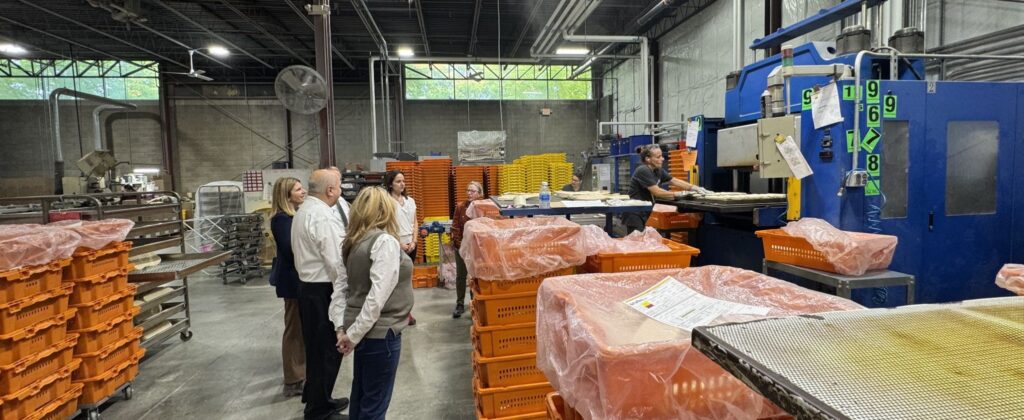

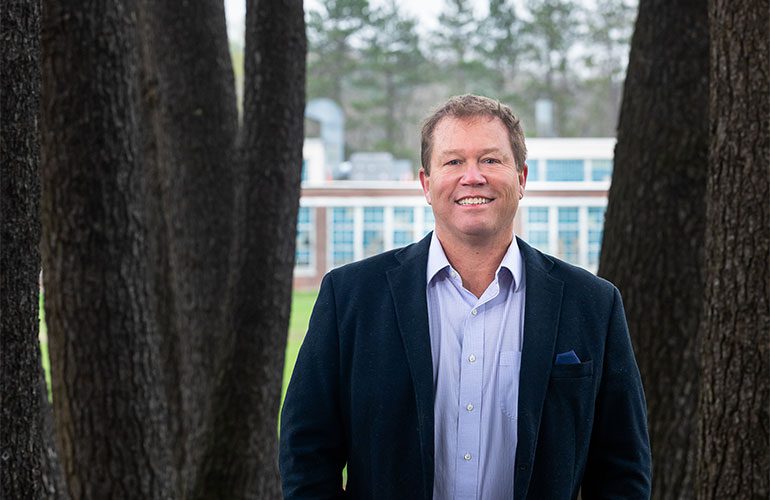
Adam Grinold Executive Director Brattleboro Development Credit Corporation.
Photo: Kelly Fletcher. Article by Timothy McQuiston, Vermont Business Magazine
Windham County is hustling. When the Entergy Vermont Yankee nuclear plant in Vernon closed at the end of 2014, much was lost. The plant employed about 600 highly paid workers. While the plant is located on the Vermont side of the Connecticut River, the workers resided about evenly in Vermont, New Hampshire and Massachusetts.
A facility that large impacts the tax base, housing, infrastructure, retail, and more, on top of the labor. The closing was politically contentious. Many agreed that the 42-year-old plant, which was showing its age, needed to be shuttered. Many others worried about the economic impact of such an action.
At the end of the day, the corporate owner, Entergy, closed the plant based not on politics, environmental impact or local sentiment, but based on the fact that plant was losing money. They made a business decision. Hardly anybody wanted to admit that, regardless of the reality. But close it did, in any case.
The most positive result of the plant’s closing was that it created a sense of urgency on the part of local public and private development and on the part of the state.
The closing of Vermont Yankee also resulted in the establishment of the Windham County Economic Development Program. WCEDP provides funding and financial services to stimulate job creation, business expansion, and economic infrastructure in the county. Originally funded by a settlement with Entergy following the plant’s closure, it focuses on private sector growth through loans and grants administered by the Agency of Commerce and Community Development (ACCD).
Like the other three southern Vermont counties, Windham has a legacy of manufacturing and tourism. Hydro power along the Connecticut and Deerfield rivers powered mills and generated electricity.
Even before Interstate 91 swiftly connected southern New England and New York to the region starting nearly 70 years ago, visitors were making their way up to Vermont via the railroad and Route 5. They found cooler summers and even cooler ski areas relatively nearby.
The interstates brought more tourists, mountain development and Act 250, which intended to quell the unregulated growth. It worked. The irony now is that with housing shortage and housing costs at a premium, there is an effort in the Legislature to reduce the regulatory impact of Act 250 on rural areas while also opening up downtowns for more concentrated growth.
A dozen years after Yankee closed, the focus of economic activity has coalesced around housing development, in a sort of if-you-build-it-they-will-come philosophy, while enhancing the region’s historic strengths in manufacturing and tourism.
BDCC
At the center of this momentum is the Brattleboro Development Credit Corporation (BDCC), which continues to translate the region’s Comprehensive Economic Development Strategy (CEDS) into tangible progress across infrastructure, workforce, business development, and community resilience.
BDCC Executive Director Adam Grinold has led the state’s largest regional development organization since, notably, 2014. He provided VermontBiz with a detailed outline of economic development efforts in Windham County and regional efforts involving Bennington County.
“We are seeing a significant shift where localized partnerships are taking the lead,” Grinold said. “In Wilmington, the collaboration between Wilmington Works, the Chamber, and municipal development provides a robust model for local support. Dover too has similar strong partnerships and outcomes.